

Alumina, commonly known as aluminum oxide (Al2O3), is a wear-resistant technical ceramic with excellent mechanical and electrical properties, widely used in various industrial applications.
Alumina exhibits high hardness, wear resistance, low erosion, high temperature resistance, corrosion resistance, and biological inertness. Its excellent high-temperature stability and thermal conductivity make it particularly suitable for high-temperature applications, such as thermocouple protection in high-temperature measurements. Precision Ceramics offers a range of advanced ceramic tubes and insulators for these applications
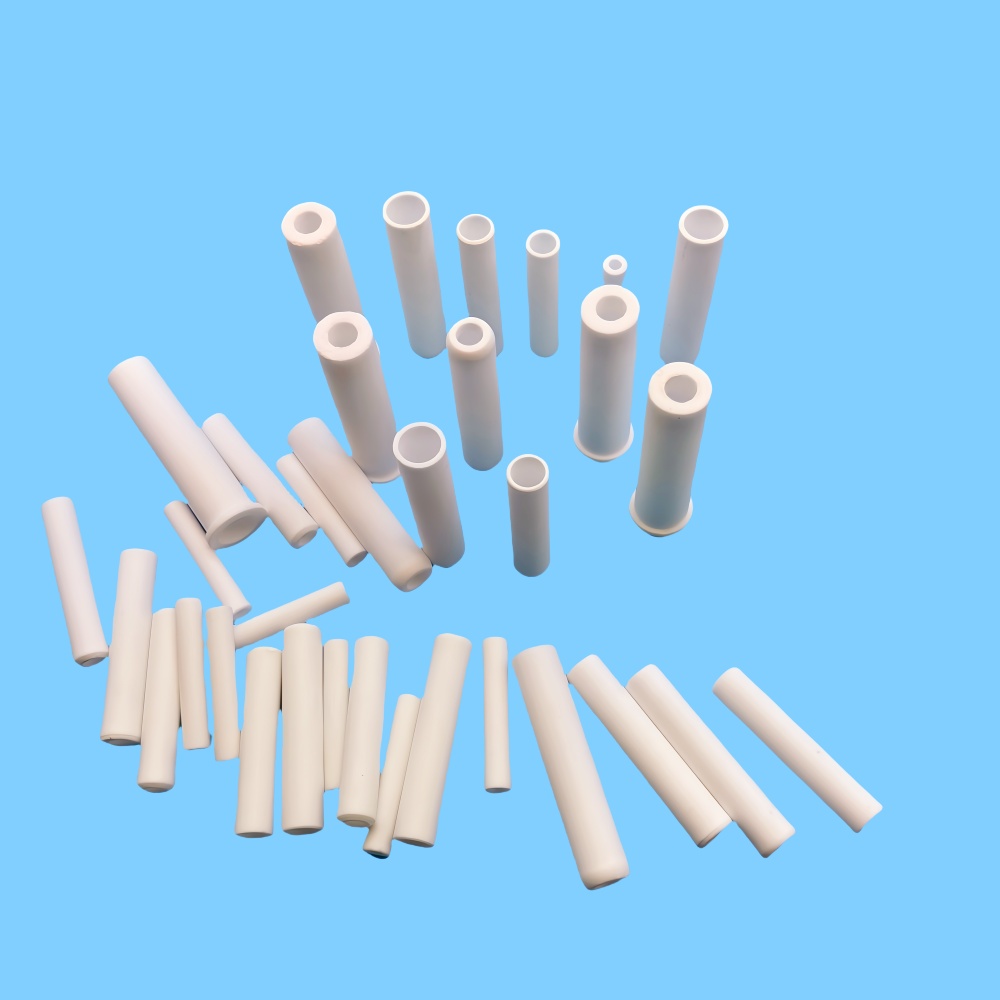
Advantages
1. High Hardness & Wear Resistance
* Alumina ceramic is extremely hard (Mohs hardness ~9, close to diamond), making it highly resistant to abrasion and wear.
* Ideal for cutting tools, grinding media, and wear-resistant linings.
2. Excellent Thermal Stability
* Withstands high temperatures (up to 1600–1700°C) without deformation.
* Low thermal expansion ensures dimensional stability in extreme conditions.
3. Superior Electrical Insulation
* High dielectric strength and volume resistivity make it suitable for electrical and electronic applications (e.g., insulators, substrates).
* Maintains insulation properties even at elevated temperatures.
4. Outstanding Chemical Resistance
* Resistant to acids, alkalis, and corrosive environments (except hydrofluoric acid and strong alkalis at high temperatures).
* Used in chemical processing, medical implants, and lab equipment.
5. High Mechanical Strength & Stiffness
* High compressive strength (2000–4000 MPa) and rigidity, suitable for structural components.
* Brittle nature is a limitation, but advanced grades (e.g., zirconia-toughened alumina) improve fracture resistance.
6. Biocompatibility
* Non-toxic and biocompatible, making it suitable for medical implants (e.g., dental crowns, hip replacements).
7. Low Density & Lightweight
* Lighter than metals like steel, beneficial in aerospace and automotive applications.
8. Smooth Surface & Low Friction
* Used in seals, bearings, and precision components where reduced friction is crucial.
9. Cost-Effective for High-Performance Applications
* More affordable than other advanced ceramics like zirconia or silicon carbide while offering strong performance.
Common Applications:
Industrial: Cutting tools, seals, pump components, grinding media.
Electronics: IC substrates, spark plugs, insulators.
Medical: Implants, prosthetics, surgical tools.
Chemical: Labware, corrosion-resistant parts.
Automotive/Aerospace: Sensors, thermal barriers.
Limitations to Consider:
Brittle (low fracture toughness compared to metals).
Difficult to machine after sintering (usually net-shaped during forming).
Overall, alumina ceramic is a versatile material chosen for its durability, thermal stability, and electrical insulation in demanding environments.